Showing posts with label photography. Show all posts

Monday, August 28, 2017

Chameleons

After weeks and months of zero-break workload, a couple of friends and I escaped over our unusually long weekend to a patch of forested paradise, also known as the CFL school in Bangalore, for 17 hours. Now, several deep breaths of non-polluted air and two chameleon sightings later, I feel like a brand new person.

While chameleons go about their days doing their best to be inconspicuous, with their slow and calculated behaviour, they can't always escape seasoned eyes of the likes of The Great Chandy (see below, looking pretty in a tree). Thanks to said eyes and expertise, we contained our glee as the chameleons showcased their unintentionally comic personalities. We got to see young chameleons turn from solid green to striped, move their eyes independently and hang surreptitiously off of swaying branches. We got to feel their unsmooth, textured skin as one held the corners of our palms with delicate-yet-firm grip.


The Great Chandy

This was the first time I've ever seen or held a chameleon, and it may have just been one of the most exciting 'lifers' I've ever had. Now that I've been initiated into this world of tiny, odd, green wonders, I hope to see many more henceforth.


Colouration that lasted but a few seconds after we put him back on the branch.


Found this guy hanging by his tail.
For a long time.
A long, long time
Until he plopped onto the branch and carried on.


Monday, July 24, 2017

The Bandra Canvas

Growing up in Bombay kept me away from the career I am now pursuing - wildlife biology. Our Sanjay Gandhi National Park is but a bubble that I wasn't allowed to explore alone until I was older. All my exposure to the serenity of the world beyond clogged civilization was restricted to short vacations around Mumbai and later, the internships that I landed during and after college. In many ways, this made me feel more at home in the wilderness, in areas that were a complete antithesis of the metropolitan that is Bombay. I found myself running away from associating myself with a city that reflects so little of my personality.

But I'm beginning to wonder otherwise. When I delve into my memories of the city itself, I realize how it nurtured me in little ways, simply by supporting me in my growing years. It is more than its cacophonous reputation to someone who has built a life there. Having lived there for 20 years before breaking gravity, Bombay forms the context to all I see. This sense of realization of where I come from isn't always on top of my mind, it's fleeting, cushioned and beckoned by momentary remembrances. But it exists, and it ought to.

I found this collection of images from two years ago lying abandoned in my drafts, much like my love for Bombay. These are images from in and around Bandra, a place made up of a concoction of cultures and religions. It's increasingly becoming a place of expression in the city, where people are free to dress the way they're most comfortable, make fashion statements, or showcase their talents. One such form of expression is seen boldly plastered across its ageing walls and streets in the form of graffiti or street art. At times, these 'vandalisms' are white-washed to restore normality, while some places cherish and flaunt them as pieces of art. Chikoo (another one of my treasures from Bombay) and I armed ourselves with our own creative weaponry and began photographing these colourful streets together. These images remind me of all the time that Bombay gave me to pursue my interests, explore the lesser spoken of gems that the city holds, and nurture friendships that I would hold onto for years to come. Consider this my minimalist tribute to where I grew up.


Thursday, December 29, 2016

The Ladakhi Way

The first homestay I went to was in Saspotchey - small and warm and cold. The Tongspan Himalayan Homestay. Looking at the old man who owned the house instantly took me back to my primary school days when I first read Tintin in Tibet. He looked just like the Sherpas that Hergé used to illustrate, with his dusty, worn-out jacket, woollen cap covering the top of his head exclusively, his slouched but sure walk, and his homely smile that brought out a hundred new wrinkles across his face. The familiarity was welcoming, and I felt certain of having met him before, at least in a dream far away.

I’m back in Ladakh, ‘The Desert in the Skies’. I’ve been craving more of this rugged, barren gorgeousness year after year since I came here to work with Snow Leopard Conservancy (SLC-IT) in 2013. Finally, this winter, I found the opportunity to fling myself into the Himalayas once more and I grabbed it in a heartbeat. I’ve been working on a project here that’s trying to understand the interactions between wolves and snow leopards, and field work has added to my mental stash of mind-blowing experiences by the truckload. I’ll elaborate once I’ve let those moments sink in and once the temperature allows me to write and type with more ease.

For now, I leave you my general wonderings.

Over the past two weeks, I have lived in five different homes and experienced first-hand what running a home in this frigidity means for its members. Last time I was here, living alone meant being left to my own devices, and I came up with my own logical ways of dealing with household tasks and daily routines. This time, I’m learning to do it the real way. One of my primary insights after having shared living space with so many hospitable, embracing families is that economic status and/or availability of disposable income has no bearing on the lifestyle that comes by virtue of living in Ladakh. No amount of monetary stability can battle facts like (1) water doesn’t flow through pipes in the winter, (2) no matter what material your home is made of, it will get cold if not kept heated, (3) availability of vegetables is limited and expensive, (4) food is tedious to prepare and is inadvertently simple in nature, (5) there are no functional bathrooms anywhere, and traditional dry compost holes-in-the-ground are far and few, or (6) the slightest gust of wind is enough to remind you that all your layers of clothing are futile attempts for warmth. Homes have heaters of several kinds that use firewood, oil, kerosene or gas cylinders, but every home uses them for the same purpose. They all have a vessel full of water placed over it, heating up for the smallest of requirements. A plastic drum full of water covered with a lid is placed someplace convenient, like the sink or the stove, and a mug is kept over it. This water is used to refill the vessel on the furnace every time water is taken from it, like an endless and intuitive cycle for the whole family.

For someone who’s lived most of her life in Mumbai, where it’s either summer or summer-with-rain, the concept of one’s whole way of life changing with the seasons is fascinating. Here, with the onset of winter, homes shift into the single room with the heater (generally the kitchen), thick rugs are hung from every doorway, windows are insulated with paper or polythene, the carpets are brought out and made to cover every inch of flooring, dung is dried for burning and firewood is collected diligently. Every morning begins with a glass of hot water followed by a cup of hot tea. One needs that kind of warmth from within to provide the motivation needed to go outside in the cold and brush up for the day. Solja, or tea, is made and served constantly. Butter tea is drunk in boredom and of habit. Their elegant ceramic bowls are refilled immediately even after drinking a single sip, attempting to keep the salty, pink fluid warm. All gaps in conversation are filled with observations about the weather and comparisons between the days and years. Between all the tea and gossip, it’s a wonder they get so much hard work done.

I’m currently living with one of SLC-IT’s members - a smart woman whose brain I’ve enjoyed picking over the last couple of weeks. I asked her once about why people are as nice as they are in Ladakh. What makes them different from the rest of this big bad world? What is right (or wrong) with them? Her opinion is that the extreme hospitability of every Ladakhi household came about as a survival strategy, and that if people didn’t help one another, life would be much harder than it already was in this hostile environment.

Ladakh was a land of simple folk, where the barter system existed up until less than a hundred years ago. Today, tourists from India and around the world are reshaping some of these traditional households and lifestyles, bringing money and stereotypical economic development to the locals. There are pros and cons to this, and perhaps they deserve a post of their own, but I hope with all my heart that this town of Leh and all the villages in Ladakh never lose sight of how intrinsically rich in culture and beauty they are.


One of the many villagers who insisted we come in for tea during an interview survey.
"kschyot le!"


A wood furnace with some soup 'naam tuk' boiling in the vessel over it.


The amale from a homestay in Saspochey.


HergĂ©'s Sherpa trying to spot a golden eagle with our binoculars.


This old nun lives alone in the only house near Rhisdung monastery with her many ferocious dogs.


Our goofy shadow as we interviewed the people of Tarutsey.


The skull of a wild ungulate, as seen hanging from several homes.


An interviewee of Tarutsey.


Traditional garb. Avec sunglasses.


Old, married women sport two plaits and all the beads they have come to own.


Lady of the house from our homestay in Tarutsey, and her visiting feline.

Saturday, June 25, 2016

Grey.

Greyscale photography focuses on the details and shadows. The unspoken-of outlines that get lost among the bright colours surrounding them. While photographing an animal or a bird, it draws attention to each shaft of fur, each whisker, the dull tones on the underside of a bird's wing. It allows one to appreciate the animal and the moment for what they are - the muscles and sinews, the veins and angles. It lets you play with the sun and discover how it plays with your subject, in turn. 

When I look at a black and white still from when I was behind the camera, it takes me back to that moment and freezes it in time. I can relive that moment with a clarity greater than a coloured image would let me, and that touch of palpable recollection is why I love using this palette. It's why other greyscale photography gives me goosebumps and penetrates my mind with a sharper ferocity than any other kind. 
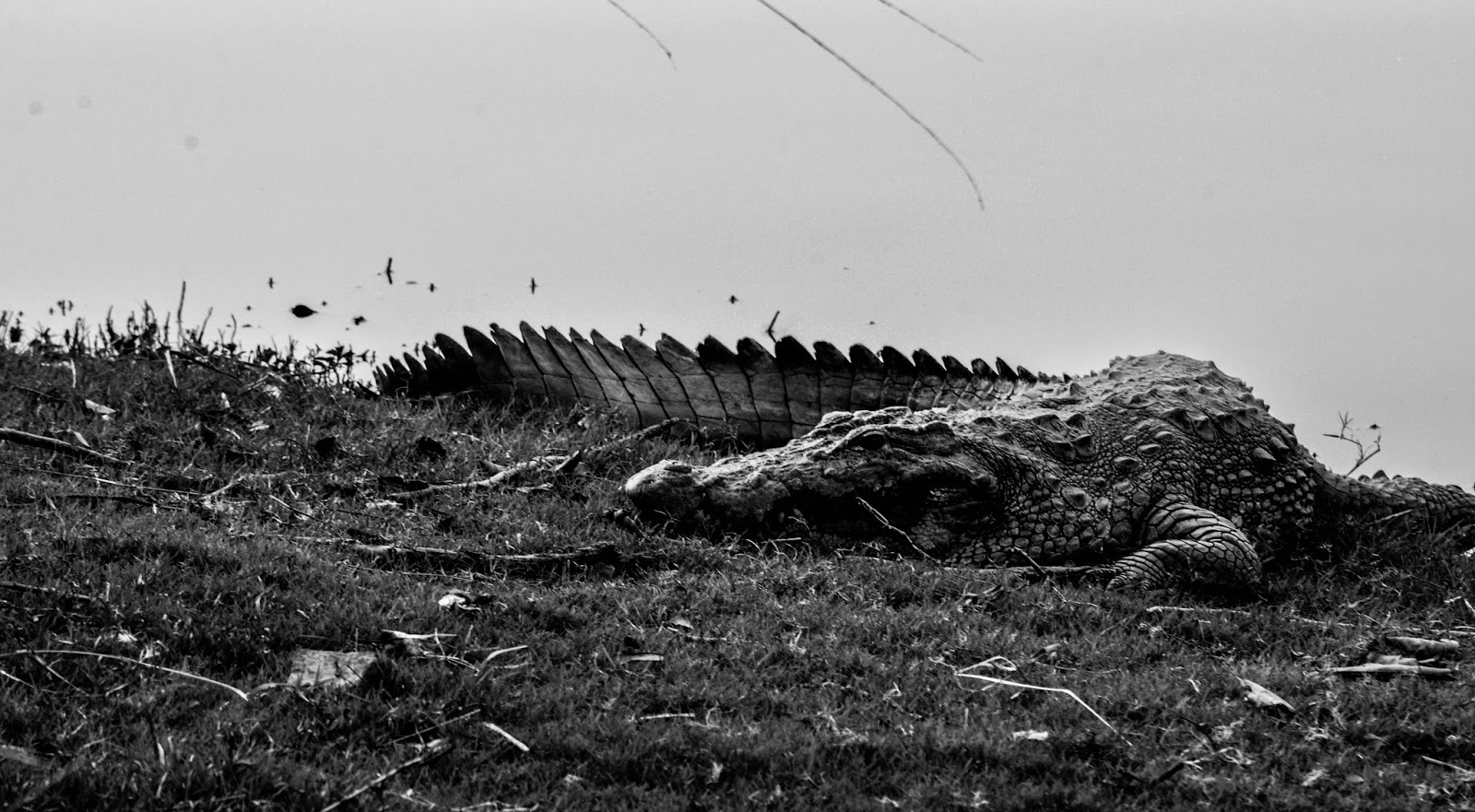
It's easy to fall in love with vibrancy and  bright hues. But to look into the dull depths of a grey canvas and discover life within is to truly understand and love the animal despite the colours it wears.


Monday, March 28, 2016

The Art of Pretending to be Fancy

Living away from home comes with several perks and nuisances. I’ve found that cooking falls under both those categories. Tanisha and I are lucky, because we enjoy food and cooking. However, that means we spend inordinate amounts of time in the kitchen preparing each meal, trying to make them as interesting as we can. It’s safe to say that the novelty is beginning to wear off, and that the prospect of cooking makes us consider stepping out for a cheap dosa or a plate of chaat…often. But our limited supply of money keeps us in the kitchen on most days, and we’ve plated many a masterpiece.

I shall now conceal from public view items like aromatic burnt khichidi and dry parsley-mint sandwiches, and share these with you instead.


Garlic mushroom salad


Baby potato garden salad


Dalia (broken wheat) upma


Shezuan noodles with mushroom and capcicum


Spaghetti in green pesto


Spaghetti in tomato sauce with mushrooms and cheese


Vegetable shezuan fried rice


Vegetable hakka noodles


Spaghetti with tofu and baby corn


Jeera rice


Sprouts


Yellow dal fry


Tabbouleh


Open-face vegetable pizza

Yummy, no? 
Yes.
Very.