Thursday, December 29, 2016

The Ladakhi Way

The first homestay I went to was in Saspotchey - small and warm and cold. The Tongspan Himalayan Homestay. Looking at the old man who owned the house instantly took me back to my primary school days when I first read Tintin in Tibet. He looked just like the Sherpas that Hergé used to illustrate, with his dusty, worn-out jacket, woollen cap covering the top of his head exclusively, his slouched but sure walk, and his homely smile that brought out a hundred new wrinkles across his face. The familiarity was welcoming, and I felt certain of having met him before, at least in a dream far away.

I’m back in Ladakh, ‘The Desert in the Skies’. I’ve been craving more of this rugged, barren gorgeousness year after year since I came here to work with Snow Leopard Conservancy (SLC-IT) in 2013. Finally, this winter, I found the opportunity to fling myself into the Himalayas once more and I grabbed it in a heartbeat. I’ve been working on a project here that’s trying to understand the interactions between wolves and snow leopards, and field work has added to my mental stash of mind-blowing experiences by the truckload. I’ll elaborate once I’ve let those moments sink in and once the temperature allows me to write and type with more ease.

For now, I leave you my general wonderings.

Over the past two weeks, I have lived in five different homes and experienced first-hand what running a home in this frigidity means for its members. Last time I was here, living alone meant being left to my own devices, and I came up with my own logical ways of dealing with household tasks and daily routines. This time, I’m learning to do it the real way. One of my primary insights after having shared living space with so many hospitable, embracing families is that economic status and/or availability of disposable income has no bearing on the lifestyle that comes by virtue of living in Ladakh. No amount of monetary stability can battle facts like (1) water doesn’t flow through pipes in the winter, (2) no matter what material your home is made of, it will get cold if not kept heated, (3) availability of vegetables is limited and expensive, (4) food is tedious to prepare and is inadvertently simple in nature, (5) there are no functional bathrooms anywhere, and traditional dry compost holes-in-the-ground are far and few, or (6) the slightest gust of wind is enough to remind you that all your layers of clothing are futile attempts for warmth. Homes have heaters of several kinds that use firewood, oil, kerosene or gas cylinders, but every home uses them for the same purpose. They all have a vessel full of water placed over it, heating up for the smallest of requirements. A plastic drum full of water covered with a lid is placed someplace convenient, like the sink or the stove, and a mug is kept over it. This water is used to refill the vessel on the furnace every time water is taken from it, like an endless and intuitive cycle for the whole family.

For someone who’s lived most of her life in Mumbai, where it’s either summer or summer-with-rain, the concept of one’s whole way of life changing with the seasons is fascinating. Here, with the onset of winter, homes shift into the single room with the heater (generally the kitchen), thick rugs are hung from every doorway, windows are insulated with paper or polythene, the carpets are brought out and made to cover every inch of flooring, dung is dried for burning and firewood is collected diligently. Every morning begins with a glass of hot water followed by a cup of hot tea. One needs that kind of warmth from within to provide the motivation needed to go outside in the cold and brush up for the day. Solja, or tea, is made and served constantly. Butter tea is drunk in boredom and of habit. Their elegant ceramic bowls are refilled immediately even after drinking a single sip, attempting to keep the salty, pink fluid warm. All gaps in conversation are filled with observations about the weather and comparisons between the days and years. Between all the tea and gossip, it’s a wonder they get so much hard work done.

I’m currently living with one of SLC-IT’s members - a smart woman whose brain I’ve enjoyed picking over the last couple of weeks. I asked her once about why people are as nice as they are in Ladakh. What makes them different from the rest of this big bad world? What is right (or wrong) with them? Her opinion is that the extreme hospitability of every Ladakhi household came about as a survival strategy, and that if people didn’t help one another, life would be much harder than it already was in this hostile environment.

Ladakh was a land of simple folk, where the barter system existed up until less than a hundred years ago. Today, tourists from India and around the world are reshaping some of these traditional households and lifestyles, bringing money and stereotypical economic development to the locals. There are pros and cons to this, and perhaps they deserve a post of their own, but I hope with all my heart that this town of Leh and all the villages in Ladakh never lose sight of how intrinsically rich in culture and beauty they are.


One of the many villagers who insisted we come in for tea during an interview survey.
"kschyot le!"


A wood furnace with some soup 'naam tuk' boiling in the vessel over it.


The amale from a homestay in Saspochey.


HergĂ©'s Sherpa trying to spot a golden eagle with our binoculars.


This old nun lives alone in the only house near Rhisdung monastery with her many ferocious dogs.


Our goofy shadow as we interviewed the people of Tarutsey.


The skull of a wild ungulate, as seen hanging from several homes.


An interviewee of Tarutsey.


Traditional garb. Avec sunglasses.


Old, married women sport two plaits and all the beads they have come to own.


Lady of the house from our homestay in Tarutsey, and her visiting feline.

Monday, September 19, 2016

SIX MONTHS IN SIX CHAPTERS: An account of time well spent

My ability to procrastinate is immortal. Vampirically immortal. Bill Watterson once eloquently said that last-minute panic is the best frame of mind within which to work. This suits me beautifully, and deadlines are the disguised curses that dance upon my shoulders every day, whispering sweet nothings into my ears, while my brain dilutes them by reassuring me with time that I don't have to spare.
Why am I being poetic about procrastination, you ask? This is my round-about way of making excuses for not writing for what seems like an eternity in light of just how much has happened over the last six months. Would the fact that my life has been eventful and amusement-park-esque be another good excuse for my absence? Or would it make my lack of writing all the more despicable? I'll let the dancing devils decide.

This time last year, I was working at a crocodile bank in Chennai, after which there was a dull lull in activity back in Mumbai until the start of this year when I moved to Goa to work with WWF. Six months there has left me with more memories than I found myself capable of penning down or photographing. Sometimes, the mind's eye is truly the best kind of documentation. I've committed everything to memory, and I feel it's safest up there. No risk of losing diaries to the natural elements or photographs to the eccentricities of technology. Just my memory, that I can dig into at any given time of the day and smile about. If I could lay each moment end to end and sew them together, I'd have the most comforting blanket anyone could dream of.

When I got back, I hoped to write about it all. All. I made elaborate lists and mind-maps of the things I saw and learned about. I was so sure I could reach into that cluster of neurons I'd been building and indulge in blissful verbal diarrhoea. That...didn't happen. *Points at the dancing devils*


Here (or soon?) begins what will (oh, so hopefully) be a series of posts about Goa.

Saturday, June 25, 2016

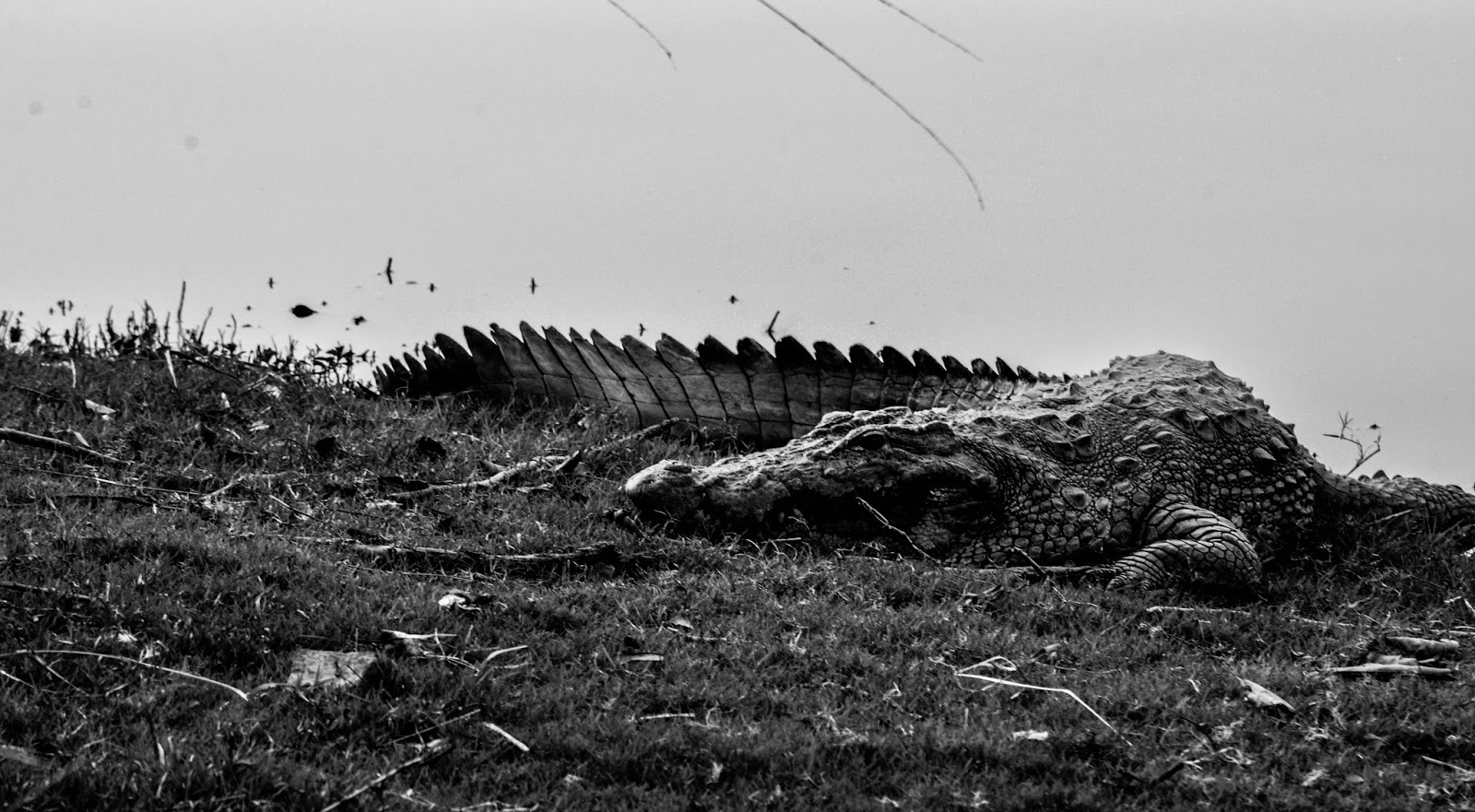
Grey.

Greyscale photography focuses on the details and shadows. The unspoken-of outlines that get lost among the bright colours surrounding them. While photographing an animal or a bird, it draws attention to each shaft of fur, each whisker, the dull tones on the underside of a bird's wing. It allows one to appreciate the animal and the moment for what they are - the muscles and sinews, the veins and angles. It lets you play with the sun and discover how it plays with your subject, in turn. 

When I look at a black and white still from when I was behind the camera, it takes me back to that moment and freezes it in time. I can relive that moment with a clarity greater than a coloured image would let me, and that touch of palpable recollection is why I love using this palette. It's why other greyscale photography gives me goosebumps and penetrates my mind with a sharper ferocity than any other kind. 

It's easy to fall in love with vibrancy and  bright hues. But to look into the dull depths of a grey canvas and discover life within is to truly understand and love the animal despite the colours it wears.


Monday, March 28, 2016

The Art of Pretending to be Fancy

Living away from home comes with several perks and nuisances. I’ve found that cooking falls under both those categories. Tanisha and I are lucky, because we enjoy food and cooking. However, that means we spend inordinate amounts of time in the kitchen preparing each meal, trying to make them as interesting as we can. It’s safe to say that the novelty is beginning to wear off, and that the prospect of cooking makes us consider stepping out for a cheap dosa or a plate of chaat…often. But our limited supply of money keeps us in the kitchen on most days, and we’ve plated many a masterpiece.

I shall now conceal from public view items like aromatic burnt khichidi and dry parsley-mint sandwiches, and share these with you instead.


Garlic mushroom salad


Baby potato garden salad


Dalia (broken wheat) upma


Shezuan noodles with mushroom and capcicum


Spaghetti in green pesto


Spaghetti in tomato sauce with mushrooms and cheese


Vegetable shezuan fried rice


Vegetable hakka noodles


Spaghetti with tofu and baby corn


Jeera rice


Sprouts


Yellow dal fry


Tabbouleh


Open-face vegetable pizza

Yummy, no? 
Yes.
Very.

Wired


Black-winged kite


Pied bushchat


Indian roller


Black drongos


Barn swallows

(Some) Birds of Goa


Jungle crow


Blue-tailed bee-eater


Black kite


White-throated kingfisher


Malabar lark


Wire-tailed swallow


Black kite


Brahminy kite


Whistling ducks


Western marsh harrier


Glossy ibis


Cattle egret

Saturday, February 6, 2016

Chikoo, it's all yummy.

Dear Chikoo,

I write to you with a content smile across my lips and a cool, spicy tingle on my taste buds. Imagine a blissful glaze across my wide-open eyes as I watch the chaat walahs layer my masala puris with nothing but meticulous love.

Turns out, Goa has kickass street food.

You know how Mumbai has those chaat carts on wheels like our bhel walah’s? Goa has them too, but with little fancy embellishments. Each cart has both chaat and pav bhaaji. Mmm. The vendors give you a little bowl full of flat puris sprinkled with chaat masala to chomp on while they prepare your order, no matter what it is. Their sev puris are made in round puris, so they fill your mouth with an explosion of chatpata flavour. Their meetha chutney is tangy and sweeter than the ones we’re used to, but in a good way. In an interesting way. Their pani puris are large, filled to the brim with icy-spicy pani. Their aloo tikkis are soft and filling- making the ragda even more delicious with them.


Now, all this being said, I still prefer the chaat back home. But the pav bhaaji here is a buttery dream. This is the closest it has ever come to tasting as good as it smells. And that’s saying a whole lot.
I think I’m this excited about the street food here because of how low I placed my expectations when I first got here. I was dejected to think that I won’t have real chaat for six whole months, and although I was excited when I first spotted a bhel walah, I was also prepared to be completely let down. But now my cravings will be ever-satiated, and I can fall asleep each night knowing that no matter what goes wrong, there will always be a cart of chaat waiting for me at the end of it.


The road perpendicular to our office is dotted with a series of chaat walahs in the evening and Tanisha and I drive past them all every day on our way home. We are now regulars at the ‘Miramar Goa Spacial’ bhel puri stall and the vendors wave and smile at us even when we don’t stop to grab a bite. In a strange way, that makes me feel like I’m settling down into this place more than anything else.


Now all I need is a sudden gush of monetary wind that will let me gorge every evening and I’ll be the happiest girl you’ve ever met.

Love always,
Poodle

PS: They call pani puri ‘water balls’.

Dolphin Watching (Hello, Goa)

Last year I visited Ranthambore National Park and spoke spitefully of the tourists there, and of how the gypsies and canters drive through the forest like lunatics, disturbing all the wildlife within. (See rants here.) I was certain that the situation couldn’t get much worse than that. I was wrong.

Life has been eventful post-Ranthambore. I spent two months working with Madras Crocodile Bank Trust (during which time I neglected my blog entirely), and now, I’m volunteering with WWF in Goa. I’m hoping to treat Teental as my conservation/travel journal during my six months here, because my daily journal entries have taken a backseat with all the commuting to work, cooking and general being-an-adult-ness. I think I’m aging.

All views and opinions mentioned henceforth are mine alone, and do not reflect the ideas or agendas of my friends, colleagues or workplace.

Goa is the holiday state of India. The place where Indians and throngs of hippie/retired foreigners descend on to rent bikes, drink, get tanned, dive and go dolphin watching. WWF did an extensive study of the tourism in Goa that revolves around Humpback dolphins and the coral reef surrounding Grande Island. After reading more about this project, Tanisha and I decided to go out on a dolphin watching boat and see what the situation was like ourselves.

Tanisha is a very pretty, curly-haired girl I’ve known for the last four years and have come to know intimately due to our working together in Chennai, and now Goa. She is one of many vibrant, wonky personalities, and you shall hear of her often in my upcoming posts.


We went to Sinquerim Jetty in North Goa and got tickets to get onto a boat that could accommodate roughly twelve people. As we waited for there to be enough people to set out with, I noticed little pools of petrol leaking into the water from the engine at the back of the boat. I then turned around to find a large family of over-enthusiastic photo-takers chatting excitedly about the boat trip they were about to take. I mentally greeted my to-be co-passengers and hoped they wouldn’t make me regret the trip later. My hope was short-lived, for even before the boat pulled away from the jetty, the daughter-in-law of the family pulled out a selfie stick from her purse and began experimenting with angles. I made a large-fonted ‘DEATH TO SELFIE STICKS’ note in my diary and tried to stare ahead.

I pictured the boat trip in a very peachy way before we set off. I imagined a boatman up front who navigated and spoke to us about what we were looking at and far fewer tourists. What we had instead, was a boatman who stuck to the back of the narrow boat with the engine, and tourists who piled into the boat in numbers so large, we ran out of life jackets. The boatman stood up briefly and mumbled to the crowd to keep their hands inside the boat and off we went. The boat rumbled away into the mouth of the bay where it joined about seven other boats before slowing down. We passed floating seagulls and beer bottles on our way- both being present in rather large numbers. The amount of garbage in the water was appalling. There were glass and plastic bottles, little bits of thermocol, a petrol can and wrappers. Truth is, each floating bit of anthropogenic waste was distanced from the other, making it seem like there wasn’t too much of it. But in retrospect, the fact that all that waste had travelled two kilometres past the shore itself proved just how much crap is being chucked into the water regularly. 

Speaking of waste, the tourists on our boat had already taken 275 selfies collectively (or individually? Who can tell?) by the time we reached the mouth. Everyone was a model and director- shouting instructions and pose ideas across the boat. The couple up front (who had been accommodated on loose plastic chairs) had been leaning backward into the water, staring at their mobile phone the entire time. I was torn between hoping they fell over and wanting to strap them into their seats. The trash, seagulls, sparkling water, beach and distant cliff were nothing but changing backgrounds for their boat-time photoshoot. The vibrant couple, for vibrant they were, looked up and over the edge of their phones only 15 whole minutes into the trip, when we saw the first dolphin surface.

I expected the dolphins to be at least 50meters away from the boats. I remember seeing dolphins at a distance of roughly 100meters from the ferries in Mumbai on the way to Elephanta islands and figured this would be similar to those sightings. I sat there, looking into the distance for signs of movement in the water, when an adult popped up 10meters away. There were simultaneous shouts from everyone on our boat and from the other ones as well, followed by exaggerated gesturing and attempts to take pictures of the dolphins. All the boats’ engines revved together and they headed aggressively in the direction of the animal. I couldn’t figure why the boats needed to be any closer. One didn’t even require a primitive pair of binoculars to see the dolphins clearly. After that first sighting, there was nothing but violent chasing. It felt like I was part of a predatorial chase. The boats zoomed madly toward the dolphin, crossed its line of movement, nearly bumped into it (twice) and even moved straight toward its head. We saw two dolphins emerge together at one point, and I can only assume that the boats confused them, for they surfaced individually afterward. The first dolphin was seen travelling quickly away from the boats initially, but was soon completely surrounded by the encircling mob of boats. There were times when the dolphin emerged for breath less than 2meters from the side of the boat. It was so easy to forget that this was a wild animal in its natural habitat. I spent those long minutes growing stress lines, feeling confident of running over the dolphins. By the end of it all, there was no time or space left to admire the beauty and elegance of these creatures.


The boatman didn’t say anything about the dolphins. He called out to the passengers the first time it emerged, and thereafter devoted all his attention to navigating the boat toward them. He didn’t even mention that they were Humpback dolphins or ask the people on board to sit down and maintain any kind of quiet. Although, it seemed like the people we were travelling with weren’t interested in gaining that kind of information, or perhaps they didn’t expect to receive any. People from other boats took pictures of the waving tourists on ours, hooted at one another, and tried hard to take pictures of themselves with the dolphins in them (expressing their disappointment if and when that didn’t work out). It was becoming rather evident that the dolphins were nothing but bonus excitement for most of these people- they were just there to have a good time on a boat and feel the sea breeze in their hair. Fundamentally, there’s nothing wrong with wanting to be on a boat and take pictures or being uninterested in the fauna of a region. But to pursue an animal with such unfettered dedication for people who couldn’t care less about it seems completely pointless.

The only time the boatman addressed the crowd was when he pointed out an 80 crore rupee bungalow upon the cliff where famous Bollywood movies had been shot, the Aguada jail and Vijay Mallya’s fancy-schmancy boat. The tourists excitedly spoke about these sights and exchanged notes about the movies shot there, and about how large and expensive Mallya’s boat looked (Note: the crew was playing loud music on the boat). By this time, the boatman turned back toward the shore and everyone else grouped up to take their last few pictures together before the trip came to an end. Not so far away, I could see the gulls circling an active fishing boat, with the wafting rumble of popular Bollywood music in the air.

When I got off the boat, I was far from happy or excited after having seen Humpback dolphins at such close quarters. I had pictured myself with my face cupped in my hands staring in wonder at the dolphins. Instead, I hung onto my seat as we chased after them and felt pangs of guilt every time they resurfaced.

A lot of good can come of having Humpback dolphins so close to the shore- and these tours can be more sensitive and informative than they are now. But these are goals that will clearly require the combined effort of the boat operators, tourists and locals, and time. It’s hard to say how long it’ll be before the situation gets any better, considering the small number of people who seem to acknowledge the faults within it.

The optimist in me still thinks there’s hope.