Showing posts with label animals. Show all posts

Friday, December 27, 2019

Day 37 - Nicobar Diaries

14th December 2017

(I have no food on my table - plastic table and chair bought to aid work and provide one of those required surfaces upon which one can put things - and yet there are always tiny ants swarming over it. They climb over my arms while I work and then travel over the island with me.)

It took some time for things to get going once I got here. I spent two very long days on the ship, during which I had an attack of loneliness, a little breakdown when my cabin-mates weren't around and then wrote some cheesy letters to friends. It was only as the ship was approaching Campbell Bay - the three hours of crawling towards the harbour in sight - when I was introduced to Jaya and her daughter by the wonderful old man I spoke of, who chatted me up while I was looking for dolphins. Of all the introductions and meetings I've had so far, which is many, this one has truly blossomed. We've become dear friends seemingly overnight, albeit in a mother-daughter manner. She and her family (husband who works in the Stores for the Forest Department and two girls just younger than me) adopted me without taking no for an answer. They gave me a bed to sleep in while I struggled to find an empty shelter to rent for my stay.

Jaya still stresses out about my well being, especially if too long has passed since I dropped by for tea or a meal. I'll never stop being amazed by how hospitable people here can be. Coming from Mumbai where our door is often closed even to friends and family if unannounced, I wonder if I deserve such love and warmth. It's not easy being on either side of that door, and I'll be damned if I don't uphold Nicobari values well into my life.

With this family's help, a lot of asking around, riding around on my scooter, some begging and groveling, I convinced a Mr Murugan to rent out one of two shelters that had been left in his care. He said I could have the one without a working bathroom, having promised the "good" one to a family who was to arrive soon. He and his right-hand-guy promised to help me fix up the house within 3 days, during which time I moved out of the Government guesthouse and into Jaya's home. After a week of their call-dodging, false promises and my nagging, I finally received the keys to a semi-functional home. It took me some days and a trench in my stipend to set it up and clean - and I live to tell the tale.

Work-wise highlights

-- I decided to begin conducting my interviews from Govind Nagar itself, as I was still setting up home in that village and it helped to not travel too far in that time. I got my surveys printed, charged up my dictaphone and set out. My first two interviews were awkward. I realized this only later while listening to my under-confident self on the recorder. I have a terrible recorded voice, so child-like and high-pitched, why do people speak to me over the phone?

Anyway, I picked up pace, confidence and structure soon enough and have managed to complete most of my interviews for this settlement. I am much more fascinated now than I've ever been. The stories and experiences that I get to hear make me feel for both the people and monkeys. Looking at conflict through avenues that bring me closer to the affected and the affectee is hard on my thoughts about the situation here.

The interviews are varied and every home is different in the way its members respond. Some homes have enthusiastic interviewees who answer most of my questions even before they escape my lips. A couple of people have enacted their experiences or the behaviours of the visiting monkeys. Some people are willing to share, but feel their experiences aren't worth sharing. One old man was so busy cleaning rice, he took 20 seconds of contemplation to answer each question. Sometimes it's easy and fun and intriguing, and at times there are long, awkward pauses and smiles. And generally, there's chai.

Most of the non-academic details from my interviews are in a document I'm maintaining on the laptop. The optimist in me thinks there's a book to be written from all this, the potential is mind-boggling. Gently having mentioned this to Ma and Nana over the phone led to them recommending illustrators for the book I haven't yet written. The instinctive encouragement on their part makes me want to give it a shot.

-- I've nearly habituated my troop entirely and it's a humbling feeling. I don't take this trust lightly, especially since I know what it was like when I first started out. I'm following the troop near B-Quarry beach, decided to do so after piloting with 4 different ones. The others were either inaccessible in spurts or outside the anthropogenic gradient I was interested in. I think I made a wise choice with this troop, since their home range covers forest patches, clearings, human habitation and coastal areas. I'm constantly discovering new things about their behaviour that I'd enjoy delving deeper into later on. I'm keeping record of these ideas, they keep me engaged.

I met a pujari whose temple is just at the beach. He feeds the monkeys regularly, much to the dismay of some people. Sometimes he shouts out to me, informing me that they're arriving. Often I'm following them already, but I humour him and thank him heartily for the help. He's a Tamilian and chats me up whenever he gets a chance. I've now developed a short-short hand so that I can continue making observations while he tells me about his life, the monkeys and Lord Krishna. He's been inviting me to his temple for evening prayers, I think I might go one of these days.

The pujari offering some coconut prasaad to my study troop

While the macaques are a bunch of naughty goofballs in most people's eyes, I can't help but be in awe of them. At the end of the day, these are wild animals - brilliant, intelligent and full of personality. Maybe our shared mannerisms and diet make them so relatable that we overlook these things. I also realized that I underestimated the time I need with each troop - it's a combination of now wanting to delve deeper into each one and juggling the behaviour work with my social surveys. I'm wondering whether to stick to just one and get to know them intimately and reliably.

-- I had an idea for citizen science a few days ago, which Rana seemed to really like as well. I'm flying with it. I start tomorrow and am hoping ardently that it works.

Only 5 months to go.

Non-work-wise, it can get lonely. I don't mean to sound ungrateful for all that's happened so far. Many people have helped me, struck up conversations and welcomed me into their lives, but I'm ultimately on my own for the most part. What makes it harder some days is knowing that this past month has crawled past, and I know that there's 5x to come. The rational parts of my mind tell me that the first month was bound to be a stretch. I was setting up the whole project and my immediate future, stress being my side-order to every meal. Once work begins in earnest, days are bound to fly by, and maybe when they do, I'll wish they didn't. 

Tuesday, April 9, 2019

Day 4 - Nicobar Diaries

12th November 2017, Chidiyatapu

Woke up early this morning to head to Chidiyatapu. It's about 1.5 hrs away from ANET with a bus change halfway through.

There's a biological park there with a handful of well-maintained enclosures for reptiles and mammals, along with a campus full of labeled large trees. It's a peaceful place to look at plants, work on tree-identification and simply go birding. I came to love the place, especially in the mornings before tourists came by, during my stay in the monsoon. I was stuck in Port Blair for 10 days longer than I intended to be back then (thanks to the fast-filling ship seats). I used that time to interview fishermen early in the morning and then watch the captive macaques at the Chidiyatapu Biological Park until it closed. I'd take the early bus towards the park, often with rain trickling into my useless raincoat through cracks in the bus, and get there in time for a cup of tea and samosa before it opened for the day. I came to know the Keeper fairly well in that time, and he would tell me colourful stories about the macaques' exploits (since I was his only available audience). I maintained a tiny notebook of what the monkeys did during the day, often dozing off in the afternoon along with them. They would roll their rotund, overfed selves into the shed in their otherwise open-aired enclosure and snooze in a primate bundle. I would sit on the tiny bench under the tiny roof opposite their enclosure, drenched from the rain, falling asleep over my soaking binoculars.

Although I was up and ready to head out early to the park like I used to, Akshay, Dayani and I soon realized that the rush of the Andaman Avian Bird Club (wonder why the felt the need for 'Avian' and 'Bird' in their name) would still be there till 10 am, owing to it being Salim Ali's birthday. We figured that it made little sense to set out that early and skip breakfast. Then, we noticed that Johnson* was making roti and chole, so that sealed the deal.

While walking down to the ghumai** later, we birded. We saw a juvenile crested hawk eagle and a HUGE flock of white-rumped munias. I've never seen so many together and up-close. They were mini-murmurating between the telephone wires and a rice field. Their calls seem like they're coming from way beyond - a gentle chatter lost in the breeze.


We got to Bathu Basti (en-route to Chidiya) only to realize that the next bus to Chidiyatapu was 1.5 hrs later. We killed time and money at Switz and ultimately took a rickshaw for lack of patience. The drive was lovely, as always. The blue of the sea had returned up to the shore post the monsoons (although it's still the season for occasional downpours).

Since we hadn't done lunch yet, we bought some samosas for later from the Aunty next to Cafe Infinity. She recognized me and asked where I'd been this whole time, leading to a small conversation in Tamil. It's always nice to be remembered by someone you remember well.

For the first time since my visit with Tarun, I did a whole round of the place with Dayani - I used to head straight to the monkeys ever since. It took us about half an hour to reach the monkey enclosure this time. I felt immediate relief and affection - a combination of emotions I reserve for seeing Chaplin*** healthy and well after a long time. The two juveniles were much larger than I last saw them. They were still in the maximum-time-spent-clinging-to-mom phase in June. Now, they were flinging themselves between branches without a care in the world. I had two long hours of solo observation with them before Akshay and Dayani joined me after looking at all the trees in the park.

Things I saw:
1. They flush insects out of the grass. They almost catwalk through the grass, parting the blades in their path with every step.


2. They catch flying insects from the air and eat them - like it's muscle memory.
3. The older female that seemed to be cast aside the first few times I was here still seems to be less socially involved in the group. Although there were no acts of aggression towards her, she kept to herself.
4. Lott, the Keeper I befriended the first time around, definitely had it wrong. He would insist that the zoo had four females co-existing in that enclosure and that their only male was kept separately at the back since he was too charged-up with testosterone. We would argue about this even then. Today, I observed how grooming led to the display of very red bottoms, which further led to the mounting and mating by the largest individual of the group - a male. Apart from the final mounting, I managed to record all the steps leading up to it - just in case I saw Lott and could do a victory lap.


People have ALL kinds of opinions about these monkeys. In the two hours that I sat there, many visitors came by, leaving me privy to their conversations. I was highly amused by their chatter -

"They are all kala bandar****. We should stay away."

"They are gorillas."

"They are from South Africa." (Confidently mentioned by boyfriend to girlfriend while standing over an information board that read 'Nicobar crab-eating macaque'.)

"They are pyaara and ittu-cute*****."

"They are very dangerous!"
An islander who was with his family recounted a story of how these monkeys severely mauled the face of a new Keeper about a year ago when he came in to feed them. His daughter, excited that his father struck up conversation with me, asked me for my binoculars and went closer to use them. Even though transition and habituation are important for species like these, I wonder how much truth is in these stories.

We emerged when it was getting dark, and another chai later, realized that the last bus back into town was bursting at its seams. We chanced upon Ravi - our trusty and resourceful cabbie who takes great pride in ferrying researchers around - who gave us a lift back to Bathu Basti. On the way, we found a molting Andaman pit viper crossing the road. We screeched to a halt and got to watch it painstakingly cross over to safety. A wonderful end to a long day.


_____________________

*Johnson is one of the ANET boys who helps Sanjay cook and take care of our hunger-related grievances.
**Ghumai translates to a roundabout - it's about 1 km away from ANET where we catch buses to go into town.
***Chaplin was my ageing dog back in Bombay who I'd miss on all my travels. I used to have nightmares about waking up one morning and hearing that he was unwell or, God forbid, no more.
****Translates to 'black monkey' which is used in a derogatory sense very often.
*****lovable and tiny-cute!

Monday, April 8, 2019

Day 3 - Nicobar Diaries

11th November 2017, ANET

Got an early start this morning and went birding with Akshay, Madhuri, Mahima and a Vice Chancellor of a university on the mainland (I forget which one). This sweet and polished man had arrived at ANET last night with his wife. He was so intrigued by our visiting Andaman scops owl by the dinner table and all the chatter about the birds you see in and around campus that went along with it, that we enthusiastically volunteered to take him birding for the single day he was there for. At night, we took a walk down the road outside under the cloudless, starry sky looking for any snakes and/or owls. We were rewarded with an Hume's hawk owl (whose call we followed until sighted) and, sadly, snake roadkill. It was wonderful to see how excited this little man was to see the owl sitting in a tree, blinking into the street light. He tilted his golf cap to one side and tried to get a good photo of it, but then handed his camera to me to do the same - just in case his hadn’t turned out well enough.

After breakfast this morning, I noticed that I had an email about my human ethics application*. I finally had a format to work with, so I spent the rest of my day making sure all of it was in place. I was glad to finally be doing this systematically, after having taken a moral standpoint (in my head) about how unethical some other studies I had read about were. I was quite excited about all of the ethnographic work I was going to do, and writing out the application gave me the chance to really get into the details of what I had planned. I spent two hours being sidetracked reading papers and anthropological methods that looked at issues qualitatively. I also got my datasheets and ethogram** in place. I impressed myself with the outburst of productivity - but I know it was mostly a distraction from the fact that it was already the second week of November and I wasn't in Nicobar yet.

The ANET library

I then took a breather, had an icy bath (after much personal motivation) and decided to watch Baby Driver, since Chandy had been nagging me to for months. The smell of brewing chai dragged me out of the library and its falling geckos. The chai had drawn more than just me, so the rest of the evening transpired through multiple conversations about local fishing practices, the Nicobarese communities, social science, owls and local dogs. As tends to happen around a table (that converts into a makeshift table-tennis top) with fun and seasoned island researchers, I can barely remember how these topics came up.

Here’s a list of the birds we saw this morning:
Brown shrike (~3)
Andaman coucal (2)
Common mynah (many)
White-breasted waterhen (3)
Red collared dove (5)
White-headed starling (many)
Blue-eared kingfisher (for the first time! The blue is so vivid, even when the sun isn’t shining directly over it, that it looked unnatural. Like an image taken by a Photoshop enthusiast with the saturation taken up all the way.)
Plume-toed/glossy swiftlet (many)
Long-tailed parakeet (2)
Small minivet (5)
Black-naped oriole (2)
Greater racket-tailed drongo (3)
Olive-backed sunbird (3)
Red-whiskered bulbul (4) (these guys were never meant to be on the island - they were introduced and have now set up shop with resolve.)
Chestnut-headed bee eater (4)
Oriental white eye
Black-naped monarch (being chased by the white eye)
Vernal hanging parrot (3) (with a bright green Phelsuma/Andaman day gecko lying along the trunk of the same tree)
Oriental magpie robin
Collared kingfisher
Green imperial pigeon (3)
Andaman flowerpecker (I love how the islands have but a few species with ‘Andaman’ or ‘Nicobar’ before the bird group - makes them so easy-lazy to identify.)
White-throated kingfisher (2)
Crested serpent eagle (a long, clear and close sighting, just by the beach. Saw it catch and eat what I think was a lizard.)
Asian koel (female)
Common/Eurasian moorhen
Andaman drongo (2)
Wimbrel

______________________

*Since I planned to do social surveys and talk to people from multiple communities about their lives with monkeys, I had to get a human ethics clearance before I could begin. After sending in my proposal twice and sending a bunch of emails, I finally discovered what was expected of me that^ day.
**An ethogram is a list of behaviours - along with their detailed, literal descriptions - that an animal could potential engage in. I had created one in advance for the Nicobar long-tailed macaques that I was about to study based off of what I had observed them doing during my recce visit in the monsoon.

Saturday, April 6, 2019

Day 2 - Nicobar Diaries

10th November 2017, ANET

Another long day outside.

I went birding early this morning with another researcher here. The road just outside ANET is narrow and largely quiet - there are a couple of farms and woody patches to one side and the ANET littoral property on the other. The simplest birding route is winding, leading straight up to beach. The last time I was at that beach during my recce visit in the monsoon, I was wading ankle-deep in sandy muck. This time the ground was firm and dry. We saw coucals, white-headed starlings, green imperial pigeons, lots of chestnut-headed bee eaters and a single collared kingfisher.

Akshay and I went to Wimberly Gunj [Wandoor to Goal Ghar by bus > Goal Ghar to Chatam Jetty > A ferry across the jetty to Bamboo Flat > A share-gypsy to Wimberly]. Aforementioned researcher called it Waverly Gunj and I can’t stop saying that in my head. Today we got a lucky lift all the way to Goal Ghar from Wandoor - very welcome since we missed the last Subhashini and we’d have had to wait for another half hour for the next one. The ferry to B-Flat (as it is very coolly referred to) was breezy and sunny, with terns flying by us. I could see the silvery-green fish skirting the rusty edges as we broooooomed along. It was nice to be back here for work after the joy ride to Mt. Herriot in April’17 with Tarun.

We got to the Forest Department to meet a Mr. Tilak who seemed perfectly nice and soft-spoken. I simply tagged along since I didn’t have anywhere specific to be. I made some logistics-related phone calls along the way. My accommodation, local transport and field assistant situation in Great Nic still seemed vague and far from in-place even after making half a dozen calls. Either way, I was heading over there soon enough and that was all I needed to keep me going for the moment.

We came back via Haddo (where the FD is), so I could fax my arrival and project details to the Deputy Forest Officer in Campbell Bay. When I spoke to A* about needing to buy a scooter here before heading to Nicobar, she promptly sat me in her swanky Govt of India car to scout the garages that her ‘man’ had contacts with. Sadly, no luck. Worked for a while from the Department and then left.

Akshay and I went to Milky Way, an ice cream place in Haddo that promises half hour of free internet. Unfortunately, the free internet was just 2% of a wifi bar. We soon headed back. Stopped at a Garacharma** tea kadai*** for a nice, stiff cup of chai and day-dreaming of the months to come before pushing ourselves into one of the last (crowded) Subhashinis headed homeward.
___________________________

*From yesterday’s post
**A midpoint bus stop on the way to Wandoor - essentially a strip of road that has a few tea stalls, mechanics and 3 privately run buses competing for commuters at any given point.
***A Tamil word for tiny corner shops

Friday, April 5, 2019

Day 1 - Nicobar Diaries

9th November 2017, Andaman and Nicobar Environment Team (ANET) field base, Wandoor

We got here late last evening, just in time to kick start the field season with all the ANET veterans and Sanjay's* food - cooked in his characteristic there's-a-party-tonight haste. 

With a lot on my mind, I hardly got any sleep last night. I completely awoke with the sun at around 5 am, listening to the Andaman shama's oddly husky song. I was ready to go to the Forest Department and plead for work permits way before I needed to be. Akshay** was still asleep, recuperating from the previous night. I was sitting outside the ANET hall waiting until it was time to leave when I saw four young skinks that seemed to have just hatched. I watched the tiny, skinny, glossy fellows until they all dispersed. Even at that early stage, it seemed like they had their own personalities. Two scurried away in a terrible hurry, one was ever-cautious (finally choosing to take shelter under the stone slab he emerged from) and one basked openly and began foraging. I must have been watching them for nearly an hour.

We stopped at Delanipur for breakfast (hello again, Kerala parotta) and some scooter inquiries which got me nowhere***. We then went to A's office in the Van Sadan building - I was meeting her for the first time. She was dressed in a crisp, well-ironed, classy-coloured saree; she got up and shook my hand. She immediately seemed like a person who is both well-aware of her power and careful about how she uses it.

Together, we drafted a letter to B, requesting the provision of permits without my proposal going through the Research Advisory Committee. It was utterly useless, though. He was a large-headed, spectacled wall off of which my pleas bounced back and smacked me in the face. He asked me to meet C instead.

Although C looked like an intimidating diamond merchant who was cheesed off with the world, he seemed to be the only person from the Forest Department who had the clarity of thought to know how and when to break through the bureaucracy. He sat back in his large, black chair, rubbing his eyes as though in exasperation, while he told me things like****:
1. You have to tell these department people to keep their ideas to themselves. When their work load is light, they end up harassing people like you with unnecessary meetings.
2. Are you mad? Who asked you to submit a proposal to begin with? You've got yourself into this mess. You don't even need permits.
3. Damned people, all sitting around like they're unemployed. No one does any real work, they just spread tension.
4. (When A mentioned that I was worried sick about not getting permits) Oh no, then why did I tell her to go ahead? I could have kept her in tension for another 10 days (followed by hysterical laughter).
5. You just want to stand on the road and look at monkeys like a tourist would, right? So go! Quietly head to Great Nicobar and don't hand in any more papers.

 He didn't even look at my paperwork. I couldn't tell whether to be relieved or worried further about the unofficial shadiness. But then again, it isn't unofficial or illegal since I don't really need a permit. I decided to stay relieved. I called the Deputy Forest Officer in Campbell Bay (Great Nicobar Division) and informed him of the situation. It was all good (?).

Somehow, I had the go-ahead I needed on the FIRST DAY. My schedule suddenly moved up a couple of weeks and I had nothing but logistics to figure out.

On the way back to ANET, I stopped by Switz Bakerz for a celebratory piece of cake. The moment I squeezed onto the Subhashini bus, heard the familiar playlist of obscure Bollywood songs and shared a nod of recognition with the conductor, everything began to sink in and feel normal. Plus, I had Sanjay's cooking to look forward to at the end of it all. 

Took a walk up to the beach with Akshay before turning in at night. On the way back, I looked up at the sky and remembered my walk along the same path on the last night of our marine biology course in the islands. That night, I had welled up immensely, wondering if I'd ever have the opportunity to come back to this place which felt so strangely like home. I felt silly in that moment for ever worrying.
_______________________________

* Sanjay is one of the ANET field staff - a brilliant cook with low tolerance for dilly-dallying, an obscure sense of humour, fantastic taste in dance music and the latest "in" hairstyle.
** Akshay is my former batch mate, dear friend and tree-ID whiz. We envisioned our master's projects in the Andaman and Nicobar Islands and got to travel together and meet intermittently because of it. He's beautiful.
*** I needed to buy a scooter in Port Blair so I could put it on a ship and transport it to Great Nicobar where I'd be doing my field work.
**** All of this was in Hindi in my diary, translated here for better understand-ability. It has, in the process, lost some magic.

My Days in Nicobar

It's now been almost a year since I got back to Bangalore from Great Nicobar and I miss it as much as I did on my first day away. I was flipping through the pages of my bursting-at-its-seams field diary, feeling nostalgic and emotional, when I felt incredibly stupid. I was holding a bundle of special moments, natural history and oddities of the island's humanity, and in that moment all of it felt moot.


With the rosy idea of putting my daily jottings into a book some day, I scrap-booked and chronicled obsessively; now, I know that it will be several years (and more research) before that happens. In the meanwhile, I have decided to relive my time there by digitizing my memories here one day at a time.

Come tomorrow (and morrow and morrow and morrow), I'll have much to share.


(^She's *looking out* for upcoming posts)

Tuesday, September 18, 2018

Mansi - The Chirput.

Field work was full of surprises, as often happens when your subjects of interest are two incredibly intelligent primate species. Of all, the best one was discovering that I would help take care of an abandoned infant macaque - affectionately named Mansi by the local Forest Department.

I was working on field one annoyingly sunny afternoon, when my troop decided to scale two cliffs and make me work up an even heavier sweat. They were just settling down into a clump of Pandanus trees for an afternoon snack and siesta, when a family I had come to know ambled along. They were there to lop some wood in that secluded forest patch, and they brought their bumbling, black-and-white dog along to keep watch. The dog, however, promptly hurtled towards the snoozing macaques, wagging his tail eagerly in hope to play. The macaques found in him a play thing rather than a playmate, slapping his snout and then jumping just out of his reach.

While the husband and son dodged the monkeys and got down to their business, the wife hid behind me, worried that the large male near my feet would jump up and swipe her. While she hid, she asked me if I had seen the Forest Department's "new baby monkey". She wasn't the first one to mention its existence, and I was beginning to take this rumour seriously. There was an air of secret celebration, as though the fertile Department had borne an infant to the island.

Before I knew it, I was brought face-to-face with this fragile, wrinkled, scrawny thing. She looked alone and crinkled in her makeshift cage. While I held onto the still-solid portions of my melting heart, I scooter-ed off to the marketplace where I found some milk powder, overripe bananas and a mother-macaque-sized soft toy. I whizzed back to the piddly one with these items to find her clutching the cane that formed the mesh of her cage. Her wet, brown eyes looked up at me with piercing longing, melting all that was left of my cardiac muscles.

I opened the door and offered her my arm, which she took with all four of hers and held onto with resolve. I could feel the thirst for contact in her grip, which seemed only to tighten with time and trust. She swung from my clothes, body and hair - never losing hold of me. I was starting to understand directly how these infants cling onto their mothers as they leap between trees and rooftops. With fingers and wrinkles which provide arboreal certainty across media, any movement was possible, no matter how petite. I remembered the way my sister wrapped her hand around my finger as a baby, and couldn't help wonder about how unimpressive human babies are when compared to our evolutionary sisters.


She clung for three hours - initially playing and eventually falling asleep. She climbed her way up into the inside of my shirt collar and slept in the warmth of my neck. I cupped her thin body with my palm, enveloping her entirely, as I felt her chest heave against me. She hugged my neck with her delicate, long, pink fingers. Her skin felt as soft as a newborn's, but had the texture of someone much older.

I felt a fierce protectiveness towards Mansi instantly. Spending that time with her felt more profound than I thought it would be. This young macaque had lost her mother, and somehow found her way into the human realm. Not so different, albeit larger, I found how I was a plushy candidate for the role of 'mom', and wanted nothing but to give her the best care within my control. If I was there only for another few months, I was going to try to do what was best by her.

When I peeled Mansi away and returned her to the enclosure, I felt cold and bare where she had been resting. I left her that night hoping ardently that she survives to an age where a troop would accept her. In the following days, we grew increasingly fond of each other, and I watched with hope and pride as she grew more dexterous and agile. I selfishly rejoiced on the inside when she preferred my arms to others, but always felt the bitterness of having to leave her island home soon.

Now, nearly 2000 kilometers away from her, with only sporadic updates about her health, I miss her ardently. Regardless of whether I see her again, the intensity in her eyes, the softness of her fur and the smell of her pee will forever remain etched in my mind.

Mansi, you lanky bit of jet-black hair, I hope you keep hanging on.


Saturday, March 31, 2018

Trust

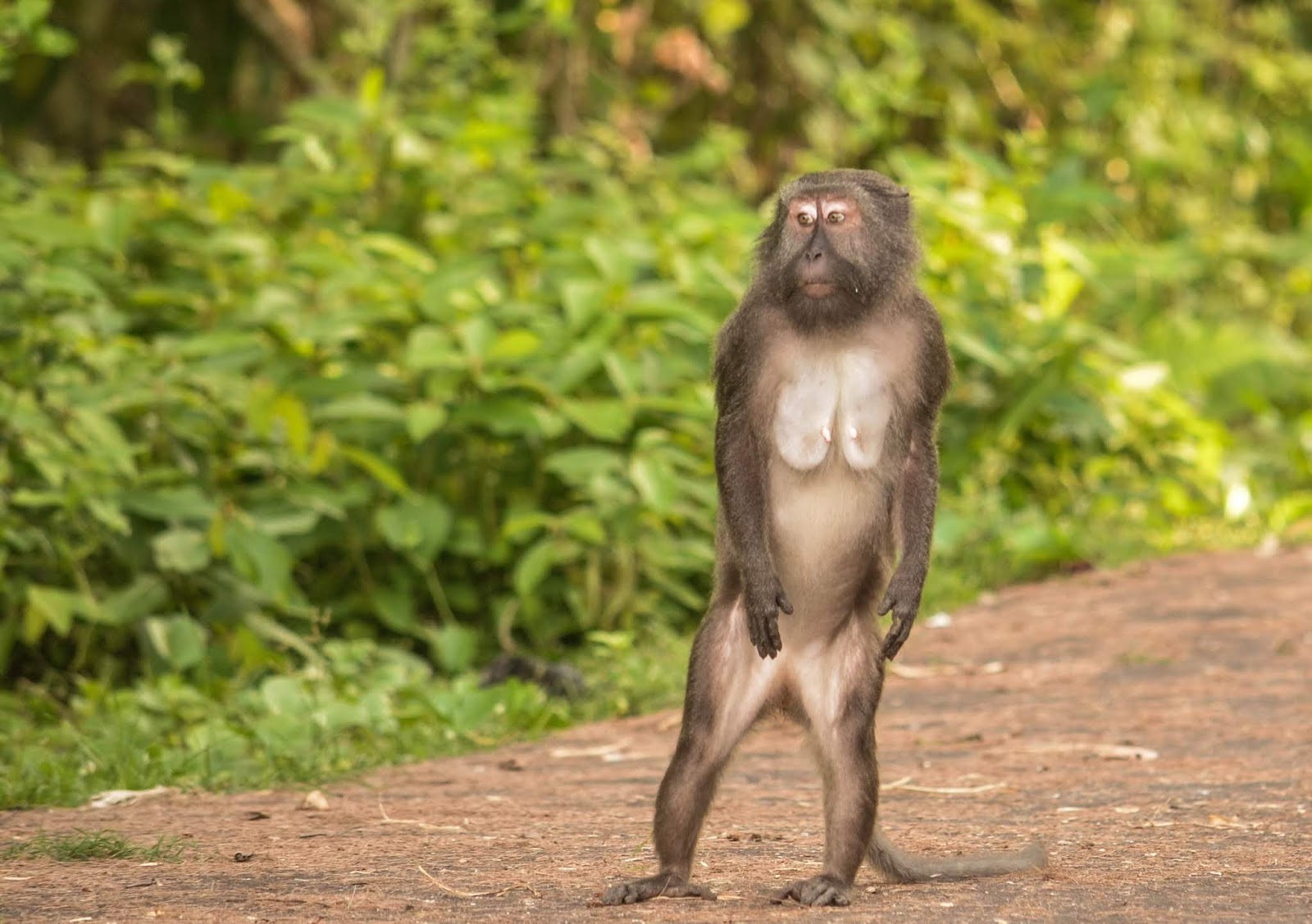
It’s been five months since I arrived on the island of Great Nicobar. I’m here to collect data for my Master’s thesis, which is focused around the Nicobar long-tailed macaque and its interactions with people. Much like the macaques in Southeast Asia, these guys have been creating steady havoc by raiding coconut plantations and vegetable gardens all over the island, and I decided to study their behaviour and the locals’ perceptions of the issue at hand. This is one of the three Nicobar Islands housing the rotund, grey, furry monkeys that have created a reputation for being intelligent, sneaky, dangerous and annoyingly prolific. Most people still stare at me in disbelief when they learn that I travelled ‘all the way from Bangalore’ to study what seem like every day, common pests.

These monkeys have faces that seem astonishingly readable at first glance. Unlike some of the other macaque species, they have long hair on their faces, but none around their eyes. Their eyelids are several shades lighter than the rest of their skin and body, and they stand out distinctly under their thick, bushy eyebrows. Their eyes tend to be a caramel brown – piercing when directed at you. When I first began following them, I was the one being observed. It took a month of respectful distance and nonchalance on my part for the troop to relax in my presence. During this period of habituation, I began to notice personalities and tendencies of several individuals and discover their responses to my body language. I took notice of them taking notice of other passers-by, but not of me. I realized at this point that they either trusted or tolerated me, and I was keen to know which one it was.

Initially, I found that I couldn’t sit down during the day. Every time I did, I suddenly became accessible; a curio that the larger males and enthusiastic sub-adults would make a beeline for, probably hoping to raid me for some food. They’d be abruptly aware of me, as though I appeared out of nowhere, and this bothered some of the more timid and cautious individuals in the group. Just as you’d find in a social gathering of people, within the troop, some monkeys take longer to warm up to you than the others, some are ever-suspicious, some are eager and inquisitive, and some simply don’t care. Soon, I found that majority of the troop fell into the last category. Having moved from an unwanted intruder that prompted an angry chorus of alarm calls through the forest patches to one of unexciting, repetitive and uninteresting demeanour, it felt like an achievement. Never before had I been as happy to be the one not worth noticing.

This being said, I’ve come to share some tickling moments in close proximity with those whose lack of concern for me led them to attempt interaction. On one such day, I sat down in the grass, tired from having walked after them for nearly eight hours. I put my clipboard in my bag and watched the monkeys groom themselves lazily in the cloudy afternoon haze. I suddenly felt one of the monkeys grip my shoulder. It was Tripod, one of the more dominant males of the group. Having made contact with me uneventfully, three other sub-adult males, a female and another adult male made their way up to me. From their casual strides and relaxed eyebrows, I felt rather confident that they meant no harm. They seated themselves around me; a couple leaned against me and began to doze off. My heart was thumping against my chest and I could feel the pulse in my neck – I was elated. Just then, their little hands began touching my arms and legs. They lifted my shirt sleeves to inspect underneath. They began to pick ants off of my pants and pop them into their mouth. Tara, another male, used his teeth ever so gently to pull off some scabs on my arm. I was being groomed. This lasted no longer than five minutes, before a female some feet away seemed to disapprove of the gathering. She raised her eyebrows rapidly, sounding low alarm calls while shooting glances at several individuals around me. I rose and stood back slowly, and the female went back to grooming her infant, as though the whole thing never happened.

On another day, I was standing fairly close to the troop while noting down some data, when a huge fight broke out among the monkeys. Nearly every adult ran frantically to the centre of conflict and the air filled with their calls of skirmish. I was left standing amidst those who opted out, now some distance away from most of the troop. As the ruckus died down, the adults slowly sauntered back to where I was. There was palpable tension in the air that I couldn’t shake; it seemed like they couldn’t either. Several monkeys searched me with their eyes as they passed by, something that was rather unusual. A couple of them sent rapid signals to the others, and several began grunting at me. The males pulled themselves up to their full, impressive height and advanced towards me in an unamicable fashion. A couple yanked at my pants and bared their teeth. Once more, I silently backed away, and they settled down almost instantly.

I realize now that even if what they have toward me is tolerance, they trust me to understand their signals. In both the occasions I related (and some more which I didn’t), the monkeys could have easily torn me to shreds with their remarkable canines and hardy nails; they have with others in the past. They could have chased me far away from where they rested; again, they have with others in the past. Instead, they chose to provide me with a minimalistic warning and let me off easy. Maybe they were okay with having a human amidst them who hadn’t tried to harm them thus far, unlike nearly every other person they encounter each day. Whatever the reason, these events help me stay grounded and remember never to take their acceptance for granted. I have utmost awe and respect for these animals, no matter how amusing, strange and quirky they can be at times.

These fantastic, wild creatures are complicated. They have moods, personalities and emotions; and I don’t feel presumptuous for saying it anymore. Watching them day in and day out for these past few months only convinces me of this further. Perhaps the data I collect will fail to portray this, with only numbers telling tales of their behaviour, but the experiences I’ve had with them will remain more fascinating and dear to me than can be statistically discernible.

Thursday, September 28, 2017

Anthropo-why?

Over the past couple of years, I've stumbled over, actively pursued and devoured several books on the topic of animal behaviour and cognition. It's a field that seems to be spoken about more frequently in books, which can be passed off as extended opinion pieces, rather than in factual, objective, scientific papers. Perhaps that's also because most long-time behaviourists find it easier to put their thoughts out into the larger, more accepting public than have them critiqued in the cautious world of scientific journals. The primary reason for this discouragement of juicy, emotional material in the academic world is one giant, taboo word - anthropomorphism.

I've wanted to write about this for nearly two years, but haven't because I was constantly reminded of the several unread, cognition-based books lying on my shelf that could change my mind about the topic. What I've found instead, with more reading, is nothing but mounting evidence for why the constant cautiousness regarding anthropomorphism may be unneeded. I received a final push to support the 'Of Course Animals Have Emotions!' team after reading what Carl Safina had to say about the matter.

"Evidence and logic can be trustworthy guides. In fact, one term for evidence+logic is: 'science'." 

This is the stance that seems to be lacking in the community of behaviour scientists who look solely at descriptive ways of recording behaviour and actions without attempting to interpret them. It is widely accepted to say, "The elephant approached her dead calf, ran her trunk over him slowly, and stayed with its carcass for three days before joining her herd that had moved on" but not to say, "The elephant was experiencing grief". By fearing that one is anthropomorphising an animal in doing so, one is being all the more anthropocentric.

I've finally learned that there is a wealth of undeniable evidence, from a cumulative of several hundred years of observations, of intelligence and emotion in the animal kingdom. This, combined with the logic that any scientist (or layman) who has been exposed to certain species for several years possesses, could come together to produce wonderful science, finally laying the foundation literature that better understanding of animal cognition must rest upon. An unnamed scientist once loosely mentioned, "I have no way of knowing if that elephant is any more conscious than this bush". I feel compelled to point out that elephants are known to make decisions, care for their offspring and, perhaps even more interestingly, share nearly the same nervous and hormonal systems as human beings. This is just one of many cases of ignoring hard evidence in the hope of remaining an objective, well-reputed researcher.

One of the reasons why most scientists only tell stories and write articles or books about their evidences for feeling and emotion in animals is that such 'stories' or 'anecdotes' fail to fit the scientific framework of collecting empirical data, analyzing it, and producing statistical evidence for or against their hypotheses. But, quoting an eloquent professor of mine, "there's no such thing as anecdotal data". This is further substantiated by an uncomfortably small niche of literature like this one. If more behaviourists or ecologists began publishing isolated instances of interesting behaviour, even if purely descriptive and non-inferential in nature, these so-called anecdotes could potentially collect over time to produce the statistical support needed to validate them within that very scientific realm. The collective support of past researchers who took the effort to inform the world about their chance anecdotes could encourage others to look closer for similar (or identical) behaviours, together building upon the subject and enriching it.

From Jane Goodall who speaks of emotion in chimpanzees to Rick McIntyre who studied wolves, multiple researchers and authors have passionately advocated for the recognition of emotion in the animal kingdom. A recent book, 'The Hidden Life of Trees', speaks of how trees, too, communicate and feel. The fact that animals perceive and respond to others around them and feel fundamentally physiological emotions like pleasure and grief, or feel the need to play and relax may be more readily accepted among the pet-owner community. I highly doubt that anyone who's known a dog, cat, pig, bird or any other (hopefully non-exotic) pet disagrees with the fact that animals can make bonds with other living beings and emote in ways that we can, at least partially, understand. Whining dogs or spitting cats are understood by their owners, behaviourists or not.

To truly understand an animal, we must delve into topics like consciousness, awareness, intelligence and emotion. None of these, however, have any standard definitions. Each of these could mean different things based on the fields we come from, and so, sentience - an amalgamation of all of these - remains undefined as well. We distance ourselves from these topics, trying to have an objective, outsider view of things, but this seems to me like losing valuable data. We are already on the inside. We share so much of the physiology that a plethora of other animals have, that we ought to be using our knowledge of how emotions manifest in our minds to better understand that of other beings.

Our evolutionary relationship with animals is sadly misinterpreted due to years of convincing ourselves that "humans" and "animals" are two completely separate categories. It's us versus them. Although we train animals to work for us, share diseases and living space, it's near impossible to believe or even imagine that we fall into the same bracket of beings. Our insecurities as a species are beginning to creep into our science and hinder it from progressing.

So sure, we may be one of the only species to feel sadness, happiness, love or pain in the poetic sense. But it's time we realized and acknowledged that these emotions do exist in other species that we've spent decades studying. Even if their grief is different from ours, it still exists. Truly comprehending the nature of these emotions is a huge task which will probably require the use of future advancements in science, but admitting that they exist is the first step towards it - one that we should have taken a long time ago.

Cynthia Moss, who spent over 50 years studying elephants in Amboseli National Park, had this to say:

"I'm interested in them as elephants. Comparing elephants to people - I don't find it helpful. I find it much more interesting trying to understand an animal as itself. How does a bird like a crow, say, with so small a brain, make the amazing decisions it makes? Comparing it to a three-year-old child - that doesn't interest me."

This is our biggest clue to overcome our ingrained fear of objectivity in studying animal cognition. We need make inferences about the animals we study without bringing to them our own emotional baggages and insecurities. Anthropocentrism, if not dealt with soon, could plague our research for good. The qualities and characteristics that we so staunchly believe are purely human, like friendship, compassion, sorrow, happiness did not suddenly come into existence with the evolutionary step into a world of Homo sapiens. These are deep-rooted in times that predate mankind. Our brain's origin is inseparable from that of other species'. Just like our mind.

Monday, August 28, 2017

Chameleons

After weeks and months of zero-break workload, a couple of friends and I escaped over our unusually long weekend to a patch of forested paradise, also known as the CFL school in Bangalore, for 17 hours. Now, several deep breaths of non-polluted air and two chameleon sightings later, I feel like a brand new person.

While chameleons go about their days doing their best to be inconspicuous, with their slow and calculated behaviour, they can't always escape seasoned eyes of the likes of The Great Chandy (see below, looking pretty in a tree). Thanks to said eyes and expertise, we contained our glee as the chameleons showcased their unintentionally comic personalities. We got to see young chameleons turn from solid green to striped, move their eyes independently and hang surreptitiously off of swaying branches. We got to feel their unsmooth, textured skin as one held the corners of our palms with delicate-yet-firm grip.


The Great Chandy

This was the first time I've ever seen or held a chameleon, and it may have just been one of the most exciting 'lifers' I've ever had. Now that I've been initiated into this world of tiny, odd, green wonders, I hope to see many more henceforth.


Colouration that lasted but a few seconds after we put him back on the branch.


Found this guy hanging by his tail.
For a long time.
A long, long time
Until he plopped onto the branch and carried on.


Thursday, April 20, 2017

Untouched, or, less touched.

The Andaman Islands house trees that could squash me like an ant if only they could lay a corner of their ginormous buttresses on me. Each tree is history. Walking through wooded areas reminded me of how puny, insignificant, trivial, inconsequential I am. Of how people are unimpressive in every way. Of how my (literal) footprint could never be as deep set as the valleys in the mud created by a single, archaic tree.

I use the large, overshadowing tree as a metaphor for the islands themselves. Despite the tar roads that weave through villages and the occasional electric line overhead, passing through them is reminiscent of another time. There’s an overwhelming anachronistic nature to the place that swoops in, swallowing all my preconceived notions of beauty and replacing them with itself. The Andamans – over land and underwater – has me seized by the collar, endearingly, and its grip is far too strong to ignore. 


More to come.

Thursday, December 29, 2016

The Ladakhi Way

The first homestay I went to was in Saspotchey - small and warm and cold. The Tongspan Himalayan Homestay. Looking at the old man who owned the house instantly took me back to my primary school days when I first read Tintin in Tibet. He looked just like the Sherpas that Hergé used to illustrate, with his dusty, worn-out jacket, woollen cap covering the top of his head exclusively, his slouched but sure walk, and his homely smile that brought out a hundred new wrinkles across his face. The familiarity was welcoming, and I felt certain of having met him before, at least in a dream far away.

I’m back in Ladakh, ‘The Desert in the Skies’. I’ve been craving more of this rugged, barren gorgeousness year after year since I came here to work with Snow Leopard Conservancy (SLC-IT) in 2013. Finally, this winter, I found the opportunity to fling myself into the Himalayas once more and I grabbed it in a heartbeat. I’ve been working on a project here that’s trying to understand the interactions between wolves and snow leopards, and field work has added to my mental stash of mind-blowing experiences by the truckload. I’ll elaborate once I’ve let those moments sink in and once the temperature allows me to write and type with more ease.

For now, I leave you my general wonderings.

Over the past two weeks, I have lived in five different homes and experienced first-hand what running a home in this frigidity means for its members. Last time I was here, living alone meant being left to my own devices, and I came up with my own logical ways of dealing with household tasks and daily routines. This time, I’m learning to do it the real way. One of my primary insights after having shared living space with so many hospitable, embracing families is that economic status and/or availability of disposable income has no bearing on the lifestyle that comes by virtue of living in Ladakh. No amount of monetary stability can battle facts like (1) water doesn’t flow through pipes in the winter, (2) no matter what material your home is made of, it will get cold if not kept heated, (3) availability of vegetables is limited and expensive, (4) food is tedious to prepare and is inadvertently simple in nature, (5) there are no functional bathrooms anywhere, and traditional dry compost holes-in-the-ground are far and few, or (6) the slightest gust of wind is enough to remind you that all your layers of clothing are futile attempts for warmth. Homes have heaters of several kinds that use firewood, oil, kerosene or gas cylinders, but every home uses them for the same purpose. They all have a vessel full of water placed over it, heating up for the smallest of requirements. A plastic drum full of water covered with a lid is placed someplace convenient, like the sink or the stove, and a mug is kept over it. This water is used to refill the vessel on the furnace every time water is taken from it, like an endless and intuitive cycle for the whole family.

For someone who’s lived most of her life in Mumbai, where it’s either summer or summer-with-rain, the concept of one’s whole way of life changing with the seasons is fascinating. Here, with the onset of winter, homes shift into the single room with the heater (generally the kitchen), thick rugs are hung from every doorway, windows are insulated with paper or polythene, the carpets are brought out and made to cover every inch of flooring, dung is dried for burning and firewood is collected diligently. Every morning begins with a glass of hot water followed by a cup of hot tea. One needs that kind of warmth from within to provide the motivation needed to go outside in the cold and brush up for the day. Solja, or tea, is made and served constantly. Butter tea is drunk in boredom and of habit. Their elegant ceramic bowls are refilled immediately even after drinking a single sip, attempting to keep the salty, pink fluid warm. All gaps in conversation are filled with observations about the weather and comparisons between the days and years. Between all the tea and gossip, it’s a wonder they get so much hard work done.

I’m currently living with one of SLC-IT’s members - a smart woman whose brain I’ve enjoyed picking over the last couple of weeks. I asked her once about why people are as nice as they are in Ladakh. What makes them different from the rest of this big bad world? What is right (or wrong) with them? Her opinion is that the extreme hospitability of every Ladakhi household came about as a survival strategy, and that if people didn’t help one another, life would be much harder than it already was in this hostile environment.

Ladakh was a land of simple folk, where the barter system existed up until less than a hundred years ago. Today, tourists from India and around the world are reshaping some of these traditional households and lifestyles, bringing money and stereotypical economic development to the locals. There are pros and cons to this, and perhaps they deserve a post of their own, but I hope with all my heart that this town of Leh and all the villages in Ladakh never lose sight of how intrinsically rich in culture and beauty they are.


One of the many villagers who insisted we come in for tea during an interview survey.
"kschyot le!"


A wood furnace with some soup 'naam tuk' boiling in the vessel over it.


The amale from a homestay in Saspochey.


Hergé's Sherpa trying to spot a golden eagle with our binoculars.


This old nun lives alone in the only house near Rhisdung monastery with her many ferocious dogs.


Our goofy shadow as we interviewed the people of Tarutsey.


The skull of a wild ungulate, as seen hanging from several homes.


An interviewee of Tarutsey.


Traditional garb. Avec sunglasses.


Old, married women sport two plaits and all the beads they have come to own.


Lady of the house from our homestay in Tarutsey, and her visiting feline.

Saturday, June 25, 2016

Grey.

Greyscale photography focuses on the details and shadows. The unspoken-of outlines that get lost among the bright colours surrounding them. While photographing an animal or a bird, it draws attention to each shaft of fur, each whisker, the dull tones on the underside of a bird's wing. It allows one to appreciate the animal and the moment for what they are - the muscles and sinews, the veins and angles. It lets you play with the sun and discover how it plays with your subject, in turn. 

When I look at a black and white still from when I was behind the camera, it takes me back to that moment and freezes it in time. I can relive that moment with a clarity greater than a coloured image would let me, and that touch of palpable recollection is why I love using this palette. It's why other greyscale photography gives me goosebumps and penetrates my mind with a sharper ferocity than any other kind. 

It's easy to fall in love with vibrancy and  bright hues. But to look into the dull depths of a grey canvas and discover life within is to truly understand and love the animal despite the colours it wears.


Saturday, February 6, 2016

Dolphin Watching (Hello, Goa)

Last year I visited Ranthambore National Park and spoke spitefully of the tourists there, and of how the gypsies and canters drive through the forest like lunatics, disturbing all the wildlife within. (See rants here.) I was certain that the situation couldn’t get much worse than that. I was wrong.

Life has been eventful post-Ranthambore. I spent two months working with Madras Crocodile Bank Trust (during which time I neglected my blog entirely), and now, I’m volunteering with WWF in Goa. I’m hoping to treat Teental as my conservation/travel journal during my six months here, because my daily journal entries have taken a backseat with all the commuting to work, cooking and general being-an-adult-ness. I think I’m aging.

All views and opinions mentioned henceforth are mine alone, and do not reflect the ideas or agendas of my friends, colleagues or workplace.

Goa is the holiday state of India. The place where Indians and throngs of hippie/retired foreigners descend on to rent bikes, drink, get tanned, dive and go dolphin watching. WWF did an extensive study of the tourism in Goa that revolves around Humpback dolphins and the coral reef surrounding Grande Island. After reading more about this project, Tanisha and I decided to go out on a dolphin watching boat and see what the situation was like ourselves.

Tanisha is a very pretty, curly-haired girl I’ve known for the last four years and have come to know intimately due to our working together in Chennai, and now Goa. She is one of many vibrant, wonky personalities, and you shall hear of her often in my upcoming posts.


We went to Sinquerim Jetty in North Goa and got tickets to get onto a boat that could accommodate roughly twelve people. As we waited for there to be enough people to set out with, I noticed little pools of petrol leaking into the water from the engine at the back of the boat. I then turned around to find a large family of over-enthusiastic photo-takers chatting excitedly about the boat trip they were about to take. I mentally greeted my to-be co-passengers and hoped they wouldn’t make me regret the trip later. My hope was short-lived, for even before the boat pulled away from the jetty, the daughter-in-law of the family pulled out a selfie stick from her purse and began experimenting with angles. I made a large-fonted ‘DEATH TO SELFIE STICKS’ note in my diary and tried to stare ahead.

I pictured the boat trip in a very peachy way before we set off. I imagined a boatman up front who navigated and spoke to us about what we were looking at and far fewer tourists. What we had instead, was a boatman who stuck to the back of the narrow boat with the engine, and tourists who piled into the boat in numbers so large, we ran out of life jackets. The boatman stood up briefly and mumbled to the crowd to keep their hands inside the boat and off we went. The boat rumbled away into the mouth of the bay where it joined about seven other boats before slowing down. We passed floating seagulls and beer bottles on our way- both being present in rather large numbers. The amount of garbage in the water was appalling. There were glass and plastic bottles, little bits of thermocol, a petrol can and wrappers. Truth is, each floating bit of anthropogenic waste was distanced from the other, making it seem like there wasn’t too much of it. But in retrospect, the fact that all that waste had travelled two kilometres past the shore itself proved just how much crap is being chucked into the water regularly. 

Speaking of waste, the tourists on our boat had already taken 275 selfies collectively (or individually? Who can tell?) by the time we reached the mouth. Everyone was a model and director- shouting instructions and pose ideas across the boat. The couple up front (who had been accommodated on loose plastic chairs) had been leaning backward into the water, staring at their mobile phone the entire time. I was torn between hoping they fell over and wanting to strap them into their seats. The trash, seagulls, sparkling water, beach and distant cliff were nothing but changing backgrounds for their boat-time photoshoot. The vibrant couple, for vibrant they were, looked up and over the edge of their phones only 15 whole minutes into the trip, when we saw the first dolphin surface.

I expected the dolphins to be at least 50meters away from the boats. I remember seeing dolphins at a distance of roughly 100meters from the ferries in Mumbai on the way to Elephanta islands and figured this would be similar to those sightings. I sat there, looking into the distance for signs of movement in the water, when an adult popped up 10meters away. There were simultaneous shouts from everyone on our boat and from the other ones as well, followed by exaggerated gesturing and attempts to take pictures of the dolphins. All the boats’ engines revved together and they headed aggressively in the direction of the animal. I couldn’t figure why the boats needed to be any closer. One didn’t even require a primitive pair of binoculars to see the dolphins clearly. After that first sighting, there was nothing but violent chasing. It felt like I was part of a predatorial chase. The boats zoomed madly toward the dolphin, crossed its line of movement, nearly bumped into it (twice) and even moved straight toward its head. We saw two dolphins emerge together at one point, and I can only assume that the boats confused them, for they surfaced individually afterward. The first dolphin was seen travelling quickly away from the boats initially, but was soon completely surrounded by the encircling mob of boats. There were times when the dolphin emerged for breath less than 2meters from the side of the boat. It was so easy to forget that this was a wild animal in its natural habitat. I spent those long minutes growing stress lines, feeling confident of running over the dolphins. By the end of it all, there was no time or space left to admire the beauty and elegance of these creatures.


The boatman didn’t say anything about the dolphins. He called out to the passengers the first time it emerged, and thereafter devoted all his attention to navigating the boat toward them. He didn’t even mention that they were Humpback dolphins or ask the people on board to sit down and maintain any kind of quiet. Although, it seemed like the people we were travelling with weren’t interested in gaining that kind of information, or perhaps they didn’t expect to receive any. People from other boats took pictures of the waving tourists on ours, hooted at one another, and tried hard to take pictures of themselves with the dolphins in them (expressing their disappointment if and when that didn’t work out). It was becoming rather evident that the dolphins were nothing but bonus excitement for most of these people- they were just there to have a good time on a boat and feel the sea breeze in their hair. Fundamentally, there’s nothing wrong with wanting to be on a boat and take pictures or being uninterested in the fauna of a region. But to pursue an animal with such unfettered dedication for people who couldn’t care less about it seems completely pointless.

The only time the boatman addressed the crowd was when he pointed out an 80 crore rupee bungalow upon the cliff where famous Bollywood movies had been shot, the Aguada jail and Vijay Mallya’s fancy-schmancy boat. The tourists excitedly spoke about these sights and exchanged notes about the movies shot there, and about how large and expensive Mallya’s boat looked (Note: the crew was playing loud music on the boat). By this time, the boatman turned back toward the shore and everyone else grouped up to take their last few pictures together before the trip came to an end. Not so far away, I could see the gulls circling an active fishing boat, with the wafting rumble of popular Bollywood music in the air.

When I got off the boat, I was far from happy or excited after having seen Humpback dolphins at such close quarters. I had pictured myself with my face cupped in my hands staring in wonder at the dolphins. Instead, I hung onto my seat as we chased after them and felt pangs of guilt every time they resurfaced.

A lot of good can come of having Humpback dolphins so close to the shore- and these tours can be more sensitive and informative than they are now. But these are goals that will clearly require the combined effort of the boat operators, tourists and locals, and time. It’s hard to say how long it’ll be before the situation gets any better, considering the small number of people who seem to acknowledge the faults within it.

The optimist in me still thinks there’s hope.

Friday, June 26, 2015

Animals of Ranthambore


Male sambar deer


Langur


Spotted deer


Domestic pig(let)


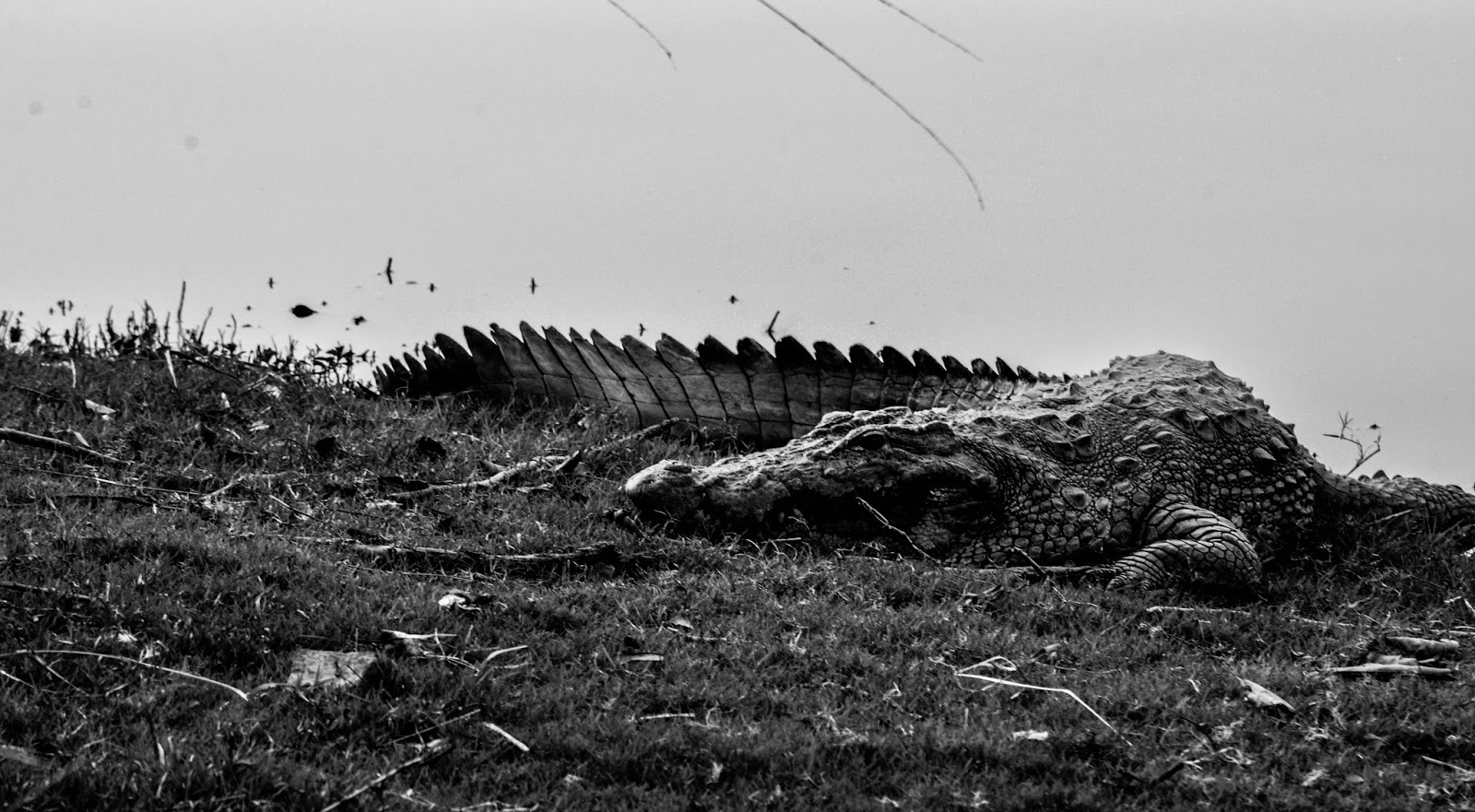
 Marsh Crocodile


Lizard


Human being


Wild boar


Male nilgai


Indian gazelle


Monitor lizard


Female sambar deer